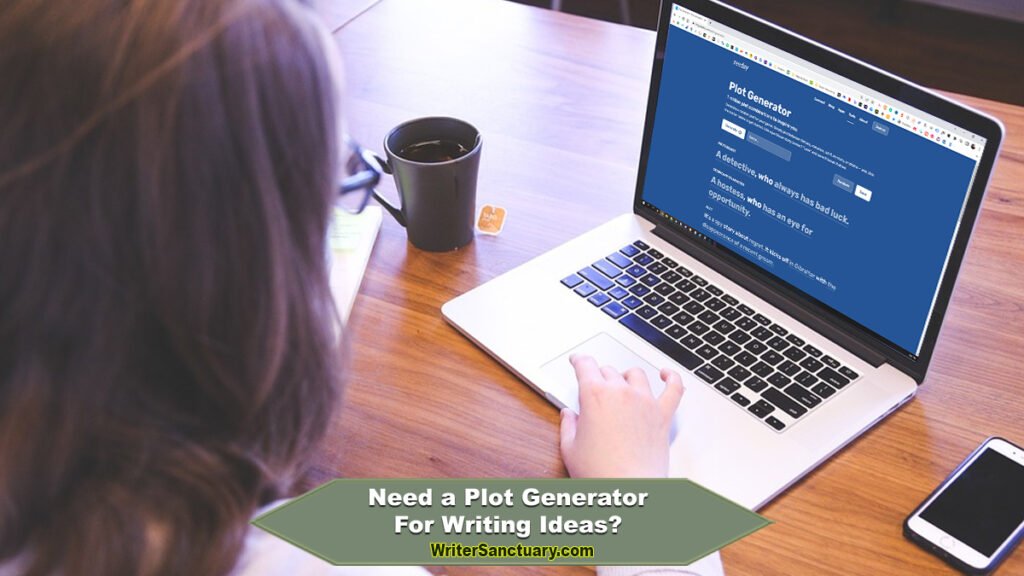
Every great story, from the epic sagas of old to the latest binge-worthy series, follows an underlying current, a rhythm that guides the reader or viewer from beginning to end. This invisible backbone is its plot structure. And for creators battling writer's block or simply seeking a fresh perspective, modern tools like AI-powered plot generators are fast becoming indispensable. They're not just brainstorming buddies; they're sophisticated engines built on established plot structures and frameworks for generators, designed to help you construct narratives that resonate.
Forget staring at a blank page, overwhelmed by possibility. Imagine a co-pilot that understands the DNA of storytelling, ready to help you chart a course from a simple concept to a full-fledged, engaging tale. That's the power we're exploring today.
At a Glance: What You'll Discover
- The Blueprint of Storytelling: Understand the fundamental components that make any plot tick, from the Inciting Incident to the Resolution.
- AI as Your Narrative Architect: Learn how plot generators leverage these structures to spark creativity, save time, and overcome writer's block.
- Two Powerful Approaches: Explore how tools like Sudowrite and modular generators offer distinct ways to build your story.
- Crafting the Perfect Prompt: Master the art of communicating your vision to an AI for the best results.
- Beyond the First Draft: Strategies for refining and personalizing AI-generated plots while maintaining your unique authorial voice.
- Avoiding Common Pitfalls: How to use generators wisely, ensuring they enhance, not hinder, your creative process.
Why Story Structure Isn't Just for English Class
Before we dive into the digital realm, let's nail down a foundational truth: structure isn't a cage; it's a launchpad. Think of a skyscraper. Without a meticulously planned structural framework, it collapses. A story is no different. A well-defined plot structure ensures your narrative has momentum, builds tension, and delivers a satisfying emotional arc. It prevents the dreaded "sagging middle" and the disappointing "weak ending."
This isn't about formulaic writing; it's about understanding the universal patterns that engage human minds. From Joseph Campbell's Hero's Journey to Freytag's Pyramid, these frameworks aren't rigid rules but rather archetypal pathways that have proven successful across millennia of storytelling. And now, thanks to advancements in artificial intelligence, these pathways are more accessible and customizable than ever before.
The AI Revolution in Plotting: What Generators Offer
The idea of a machine helping to craft stories might sound like science fiction, but it's very much a reality. Modern plot generators aren't here to replace human creativity; they're here to amplify it. They serve as incredibly powerful co-conspirators, designed to take your core ideas and quickly suggest engaging plot structures and developments.
Imagine you have a character concept – say, a retired detective haunted by a cold case. You know the setting – a misty coastal town – and the themes you want to explore – memory, redemption, and change. Instead of endless staring contests with your screen, an AI tool like Sudowrite can transform this simple prompt into a full-fledged plot structure with a beginning, middle, and end. It suggests compelling story arcs, identifies opportunities for tension and conflict, and helps ensure proper pacing.
Core Benefits of Leveraging AI for Plotting:
- Sparks Creativity & Overcomes Blocks: When you're stuck, a generator can provide a fresh perspective, offering narrative frameworks you might not have considered.
- Ideates Compelling Arcs: It can suggest character developments, plot twists, and dramatic beats that elevate your story.
- Personalized Structures: Many tools analyze successful narrative patterns and adapt them to your unique vision, maintaining your author's voice.
- Transforms Abstract Concepts: Turn a vague idea into a coherent narrative with meaningful character arcs and satisfying conclusions.
- Offers Multiple Pathways: Generate alternative plot directions or character motivations, providing options when you hit a wall.
- Saves Hours of Brainstorming: Quickly assemble a functional outline, freeing you to focus on the nuances of character, world-building, and prose.
This isn't just about speed; it's about efficiency and expanding your creative bandwidth.
Deconstructing the Narrative Blueprint: Essential Plot Pillars
Many plot generators, particularly modular ones, are built upon the foundational "Five Essential Pillars of Storytelling." Understanding these pillars is key to both using generators effectively and evaluating their output. These are the universal turning points that shape a compelling narrative.
- Inciting Incident:
- What it is: The event that shatters the protagonist's ordinary world, presenting them with a problem, a goal, or a call to adventure. It’s the "hook" that grabs the reader.
- Generator perspective: Generators use this as the starting gun. Given your genre and character, they suggest various ways to disrupt the norm – a mysterious letter, a sudden death, a shocking discovery, an unexpected summons.
- Example: A cynical detective receives a call about a murder that mirrors an unsolved case from his past.
- Rising Action:
- What it is: The series of challenges, obstacles, and conflicts the protagonist faces while pursuing their goal. The stakes escalate, tension builds, and the protagonist often makes critical mistakes or discoveries.
- Generator perspective: This is where generators shine at crafting compelling sequences. They identify opportunities for new characters, complications, setbacks, and mini-victories. They ensure the narrative isn't static, presenting a continuous climb towards the story's peak.
- Example: The detective interviews witnesses, uncovers hidden motives, faces threats from unknown adversaries, and grapples with his own past trauma resurfacing.
- Midpoint:
- What it is: A major turning point roughly halfway through the story. The protagonist's goal often shifts from a superficial "want" to a deeper "need." The stakes are dramatically raised, and there's often a significant revelation, a reversal of fortune, or a point of no return.
- Generator perspective: This is a crucial pivot point. A generator might suggest a twist that completely changes the protagonist's understanding of the conflict, or an event that forces them to commit fully to their new, deeper objective. It prevents the story from lagging.
- Example: The detective discovers a crucial piece of evidence, but it implicates someone he trusts, forcing him to question everything he believed about the original cold case. His "want" (solve the case) becomes a "need" (uncover a deeper conspiracy and find personal redemption).
- Climax:
- What it is: The story's ultimate confrontation. All the rising action culminates here, requiring the protagonist to use everything they've learned and endured. It's the peak of conflict and tension, the point of no return where the central problem is finally faced head-on.
- Generator perspective: Generators help orchestrate this peak. They ensure all the threads woven during the rising action converge, providing a dramatic showdown that tests the protagonist to their limits.
- Example: The detective confronts the true perpetrator in a tense standoff at the old lighthouse, where revelations about the past and present intertwine, leading to a desperate struggle.
- Resolution:
- What it is: The aftermath of the climax. It shows the consequences of the final confrontation, establishes the protagonist's "new normal," and provides closure. Not always a "happy" ending, but one that feels earned.
- Generator perspective: This component helps ensure a satisfying wrap-up. It guides the story to a meaningful conclusion, showing how the character has changed and what the new world looks like.
- Example: The perpetrator is apprehended, justice is served (or complicated), and the detective, though scarred, finds a measure of peace and a renewed sense of purpose, ready to face the future changed by his ordeal.
By understanding these pillars, you gain a powerful lens through which to evaluate and modify any plot suggested by a generator.
How AI Plot Generators Work Their Magic
At their core, plot generators leverage complex algorithms and vast databases of existing narratives. They don't create stories from scratch in the human sense; they identify patterns, connections, and logical progressions based on the input they receive.
When you provide a prompt to an AI tool like Sudowrite, describing your characters, themes, and setting, the AI:
- Parses Your Input: It breaks down your natural language description into key entities, relationships, and desired narrative elements.
- References Narrative Models: It draws upon established plot structures (like the Five Pillars, Hero's Journey, Three-Act Structure) and genre conventions (e.g., typical beats in a romance vs. a thriller).
- Generates Options: It then synthesizes new possibilities by combining these elements. For instance, if you specify "mystery," it knows to include elements like red herrings, clues, suspects, and a final reveal.
- Iterates and Refines: Through continued interaction, the AI learns your preferences, adapting its suggestions to better match your style and vision. It's a feedback loop: your input guides the AI, and the AI's output inspires your next instruction.
Modular generators, like the Ultimate Modular Plot Generator, simplify this process by breaking down the narrative into explicit components. You don't prompt with natural language as much as you select predefined "building blocks" for each pillar. This approach is fantastic for understanding the mechanics of story structure visually, allowing you to Generate a story plot by mixing and matching various Inciting Incidents, Rising Action events, Midpoints, Climaxes, and Resolutions. This gives you thousands of unique combinations, essentially acting as a storytelling Lego set.
Choosing Your Generator: A Feature Comparison
While both AI-powered and modular generators aim to assist in plot development, their approaches and strengths differ.
| Feature | AI-Powered Generators (e.g., Sudowrite) | Modular Generators (e.g., Ultimate Modular Plot Generator) |
|---|---|---|
| Input Method | Natural language prompts (descriptions of characters, themes, settings, specific elements). | Dropdown menus for specific plot components (Inciting Incident, Rising Action, etc.). |
| Output Style | More freeform, narrative suggestions; often detailed developments, character insights, plot twists. | Structured, five-part outlines with specific descriptions for each pillar. |
| Creative Control | High. Users modify and expand suggestions; AI adapts to user preferences over time. | High. Users select exact components; clear understanding of how each piece contributes. |
| Core Strength | Sparks creativity from abstract ideas, analyzes successful patterns, suggests engaging arcs, personalized plot structures. | Infinite creative combinations, prevents pacing issues, teaches fundamentals visually, quickly assembles outlines, highly customizable to any genre. |
| Best For | Overcoming writer's block, exploring complex themes, getting detailed narrative developments from a simple seed. | Quickly building a functional outline, learning story structure, ensuring proper pacing and critical turning points, genre experimentation. |
| Learning Curve | Moderate (requires good prompting skills and iterative refinement). | Low (straightforward selection process). |
| Neither is inherently "better"; they cater to different needs and writing styles. Many writers find value in using both at different stages of their creative process. You might use an AI-powered generator for initial brainstorming and then feed that into a modular tool to solidify the structural integrity. |
Mastering the Art of the Prompt: Getting the Most from Your Generator
The quality of your generator's output is directly proportional to the quality of your input. Think of it like cooking: even the best chef needs good ingredients.
Here’s how to craft prompts that yield compelling results:
- Be Specific, But Not Restrictive:
- Good: "A gritty sci-fi noir set on a space station, protagonist is a disillusioned cyborg detective, themes of identity and corporate control."
- Less Good: "A sci-fi story."
- Why: Specificity gives the AI hooks to latch onto. Tell it the genre, the core character, key themes, and important settings.
- Focus on Conflict and Goals:
- What does your protagonist want? What's standing in their way?
- Example: "Protagonist needs to find a missing data chip before it falls into the wrong hands, but she's being hunted by her former mentor."
- Why: Conflict is the engine of story. Giving the AI a clear objective and obstacle helps it build a journey.
- Provide Keywords and Moods:
- Use adjectives and descriptive terms. "Atmospheric, tense, hopeful, bleak, whimsical."
- Example: "A cozy fantasy mystery, with a grumpy wizard solving magical mishaps in a quaint village. Think 'Sherlock Holmes meets Ghibli'."
- Why: This guides the AI in tone and style, preventing generic outputs.
- Embrace Iteration:
- Don't expect perfection on the first try. Generate, review, and refine your prompt. Add more details, remove elements that aren't working, or specify what you didn't like about previous suggestions.
- Why: AI is a collaborative tool. It learns from your feedback and helps you hone in on the best ideas.
- Mix and Match:
- If using a modular generator, don't be afraid to try different combinations of Inciting Incidents and Climaxes. See how a change in one affects the logical flow of the others.
- Why: This is where the "infinite creative combinations" come into play, helping you prevent common pacing issues and explore novel structural pathways.
Beyond the Outline: Refining and Personalizing AI-Generated Plots
An AI-generated plot is a fantastic starting point, a robust skeleton. But it's not the finished novel. Your unique voice, perspective, and nuanced character work are what will bring it to life.
- Inject Your Characters:
- The AI provides plot beats; you provide the why for your characters. How do they specifically react to the Inciting Incident? What unique flaws or strengths do they bring to the Climax?
- Action: Flesh out motivations, backstories, and internal conflicts. How does the plot challenge their core beliefs?
- Flesh Out the World:
- A generator gives you "a coastal town." You make it your coastal town. What are its unique quirks, history, and inhabitants? How does the setting itself play a role in the rising action?
- Action: Add sensory details, establish cultural norms, and integrate world-building naturally into the plot points.
- Deepen the Themes:
- The generator might suggest "redemption." How is that theme explored uniquely through your story? Are there sub-themes, or contrasting ideas?
- Action: Weave thematic elements into character dialogue, decisions, and descriptive passages. Show, don't just tell, the thematic weight.
- Add Your Personal Twists:
- The AI will give you logical progressions. What can you do to surprise the reader (and yourself)? Introduce a new character, a unique magical system, or a moral dilemma that wasn't immediately apparent.
- Action: Look for opportunities to subvert expectations or add layers of complexity to the plot beats.
- Maintain Creative Control:
- Remember, you are the author. The AI is a tool. If a suggestion doesn't feel right, change it. If it sparks a completely different idea, follow that path. The best generators are designed for this flexibility, allowing you to modify or expand suggestions as you see fit.
Common Pitfalls and How to Avoid Them
While incredibly helpful, relying solely on plot generators without critical thought can lead to certain issues.
- The Generic Trap:
- Pitfall: Over-relying on default suggestions can lead to plots that feel formulaic or predictable, lacking a unique spark.
- Avoid: Always infuse your personality. Use the generator for structure, but bring your specific voice, quirky characters, and unexpected details to the table. Don't be afraid to deviate significantly from the AI's first suggestions.
- Pacing Problems (Even with Structure):
- Pitfall: While modular generators help prevent a sagging middle by placing a Midpoint, the duration and intensity of the rising action still need human oversight. An AI might suggest events, but you decide how quickly they unfold.
- Avoid: After generating an outline, review it critically. Are there too many events crammed into one section? Are there lulls where tension should be building? Adjust the density and emotional weight of each plot beat.
- Loss of Organic Discovery:
- Pitfall: Sometimes, the joy of writing comes from discovering the plot as you go. Over-structuring too early might stifle this organic process.
- Avoid: Use generators as a flexible guide, not a strict mandate. If a new idea strikes you mid-draft that diverges from your generated outline, explore it. You can always re-generate a new section or adjust your existing structure.
- "Tell, Don't Show" Tendencies:
- Pitfall: An AI outline is descriptive ("Protagonist confronts antagonist"). It doesn't write the scene for you. If you simply translate the outline without delving into sensory details, emotion, and action, your prose will suffer.
- Avoid: Treat each bullet point from the generator as a prompt for a scene. Ask yourself: What does this look like? What does it feel like? What are the characters saying and doing? How does this show the plot development?
Your Story, Supercharged: Next Steps with AI Plotting
The landscape of storytelling is evolving, and tools leveraging advanced AI are at the forefront of this change. Far from diminishing the writer's role, plot generators empower you to focus on what truly matters: the art of crafting compelling narratives. They provide the scaffolding, allowing your imagination to build the magnificent structure atop it.
Whether you're struggling with a first draft, refining a complex series, or simply looking for fresh inspiration, exploring plot structures and frameworks for generators can be a game-changer. These tools are ready to analyze successful narrative patterns, identify opportunities for tension and resolution, and transform your abstract concepts into coherent, engaging stories.
So, take that character idea, that intriguing setting, or that burning theme. Give it to an AI plot generator, and watch as the blueprint for your next masterpiece begins to emerge. The future of storytelling is collaborative, and your creative journey is about to get a powerful new co-pilot.