In the dynamic world of creative writing, the blank page can often feel like an insurmountable wall. Whether you're a seasoned screenwriter facing a tight deadline or a budding novelist grappling with writer's block, the quest for fresh ideas is eternal. This is where Understanding Plot Generation Tools becomes not just helpful, but potentially game-changing, especially as artificial intelligence (AI) steps into the creative arena. These tools aren't here to replace human ingenuity, but to amplify it, offering new avenues for exploration and accelerating the storytelling process.
Think of them as your highly capable, always-on brainstorming partner – a digital muse that never sleeps and always has a fresh perspective.
At a Glance: What You'll Discover About Plot Generation Tools
- Boost Creativity: Overcome writer's block and discover novel plot twists or character dynamics.
- Save Time: Automate initial plot and character development, speeding up your first drafts.
- Leverage AI's Power: Understand how machine learning, NLP, and generative models craft storylines.
- Know the Benefits: See how these tools enhance efficiency, consistency, and even predict audience reactions.
- Navigate the Challenges: Be aware of limitations like quality control, ethical concerns, and the need for human oversight.
- Effective Use: Learn a step-by-step approach to integrate these tools seamlessly into your writing workflow.
- Future Prospects: Get a glimpse into advancements like VR/AR integration and ethical AI development.
The Ever-Evolving Narrative: Why Plot Generation Tools Are More Relevant Than Ever
For centuries, storytelling was a solitary craft, a deeply personal journey from idea to manuscript. Today, while the essence of creativity remains human, the tools at our disposal have transformed dramatically. The rise of digital plot generators, particularly those powered by artificial intelligence, marks a significant shift, offering writers unprecedented support in overcoming common hurdles.
Whether you're trying to escape the dreaded writer's block, explore unconventional narrative paths, or simply streamline your initial brainstorming, these tools act as catalysts. They can swiftly provide foundational elements like story prompts, character archetypes, detailed settings, and compelling conflicts, turning hours of ideation into minutes. This isn't about shortcutting the creative process; it's about making it more efficient and less daunting, allowing you to spend more time on the nuanced craft of writing and less on the initial concept generation.
What Exactly Are Plot Generation Tools? Your Digital Storyteller's Assistant
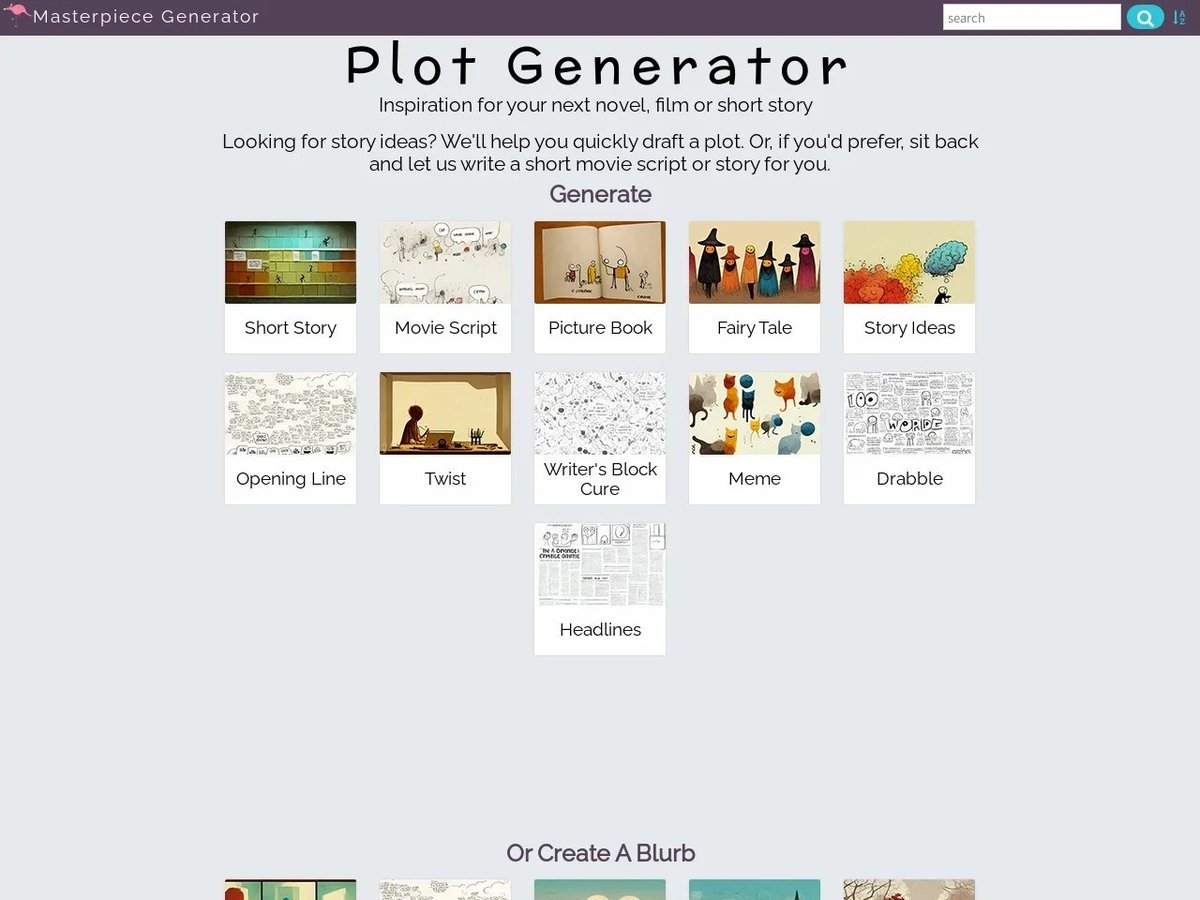
At their core, plot generation tools are software or online platforms designed to inspire and assist writers in developing narrative elements. They range from simple, random prompt generators to sophisticated AI-driven systems that can build complex, multi-layered storylines.
Imagine this: You're staring at a blank screen, wrestling with a novel idea for a story plot generator. A basic tool might offer a random combination of a protagonist, a setting, and a conflict. "A reclusive librarian discovers a hidden portal in an ancient map." That's a start.
An AI-powered tool, however, takes it several steps further. Using advanced algorithms, it can not only generate that initial spark but also expand upon it, suggesting character backstories, potential subplots, suitable genre conventions, and even pacing recommendations. These sophisticated platforms analyze vast datasets of existing narratives to understand patterns, structures, and tropes, then use that knowledge to create unique, contextually relevant plot points that maintain originality and coherence.
Key Features That Define a Good Tool:
- Idea Generation: The bread and butter. Provides story prompts, concepts, and scenarios.
- Character Development: Suggests traits, backstories, motivations, and relationships to build compelling personas.
- Setting Creation: Offers detailed descriptions of locations, atmospheres, and world-building elements.
- Conflict Resolution: Presents potential challenges, obstacles, and various ways characters might overcome them.
- Customizable Prompts: Allows you to tailor the generated content to your specific vision, genre, or desired themes.
- Genre-Specific Options: Whether you're writing fantasy, sci-fi, romance, or a nail-biting thriller, the tool can adapt.
- Plot Outlining Capabilities: Advanced generators can provide detailed structural outlines, not just isolated ideas.
- User-Friendly Interface: Intuitive design is crucial for ease of use, ensuring you spend time writing, not wrestling with software.
- Integration with Writing Software: Some tools offer seamless transfer of generated content to popular platforms like Microsoft Word or Google Docs.
- Support and Updates: Ongoing functionality, new features, and bug fixes are essential for long-term utility.
The AI Revolution: How Machine Learning Powers Next-Gen Plot Generation
The real game-changer in plot generation is the integration of artificial intelligence, specifically machine learning (ML), Natural Language Processing (NLP), and generative models. These technologies empower tools to move beyond simple randomness and into truly intelligent, creative assistance.
Machine learning algorithms analyze massive script and story datasets—we're talking hundreds of thousands of narratives—to identify underlying patterns, narrative structures, character archetypes, and plot trajectories. This deep learning enables them to generate unique storylines and create surprisingly complex character profiles that resonate with established storytelling principles.
Take Natural Language Processing (NLP), for example. It allows AI to understand, interpret, and generate human language. This means it can generate contextually relevant plot points, dialogue snippets, and character descriptions that feel natural and coherent within your story's framework. Generative models, such as those found in platforms like GPT-4, are particularly adept at producing original storylines, dialogue, and even full narrative drafts from minimal prompts. They learn from the vastness of human text to create something new, rather than just remixing existing content.
Certain tools are already leveraging this power:
- Plotagon and ScriptBook are notable for their ability to predict audience reactions and provide real-time feedback on script elements like pacing and narrative flow. Imagine getting an instant read on whether a scene might drag or a character motivation feels weak.
- IBM Watson is recognized for its capacity to simulate realistic character behavior and emotional responses, adding layers of depth to your creations.
- Tools like Final Draft, while primarily screenwriting software, are starting to incorporate AI features to flag inconsistencies in character traits or plot points, helping maintain narrative integrity.
This isn't just about speed; it's about bringing an analytical, data-driven perspective to the inherently human art of storytelling.
Beyond the Spark: Tangible Benefits You Can Expect
Integrating AI-powered plot generation tools into your creative process can unlock a multitude of advantages, fundamentally changing how you approach your writing projects.
- Enhanced Efficiency: One of the most immediate benefits is the drastic reduction in time spent on initial plot and character development. AI can help you churn out first drafts up to 50% faster by providing a solid framework, allowing you to focus your precious time on refining dialogue, deepening themes, and perfecting prose.
- Elevated Creativity: These tools are fantastic for smashing through writer's block. They introduce novel plot twists, fresh character dynamics, and can even suggest ways to tailor your plots to trending themes you might not have considered. It's like having a bottomless well of inspiration.
- Data-Driven Insights: Some advanced tools can analyze audience preferences and market trends. This means you can optimize your script or story for better reception, understanding what resonates with readers and viewers even before you've finished writing.
- Consistency and Cohesion: Maintaining narrative integrity across a sprawling story can be a nightmare. AI tools can meticulously track character traits, plot points, and timelines, ensuring your narrative remains consistent and coherent throughout its entirety.
- Real-Time Feedback: Imagine instant analysis of your pacing, dialogue, and emotional impact with actionable suggestions right as you write. This immediate feedback loop allows for continuous improvement and refinement.
- Collaborative Assistance: Think of AI not as a replacement, but as a co-writer. It enhances screenplay quality by offering alternative perspectives and generating new ideas, all while preserving your unique voice and creative control.
- Accessibility for Diverse Skill Levels: For beginners, these tools offer structured guidance and a clear pathway to constructing a narrative. For seasoned writers, they provide advanced features to experiment with complex storytelling techniques.
- Cost-Effective Solutions: By automating repetitive tasks like basic research and idea generation, you can significantly reduce the overall time and associated costs of content production.
- Predictive Performance Analytics: Some cutting-edge tools can even forecast a script's potential success based on elements like plot complexity, character appeal, and genre fit, offering valuable insights for commercial projects.
- Scalability in Content Creation: If you're working on multiple projects or need different versions of a story for various audiences, AI can simultaneously generate several script versions, greatly increasing your output capacity.
Navigating the Treacherous Waters: Challenges and Considerations
While the benefits are compelling, embracing plot generation tools isn't without its complexities. It’s crucial to understand the limitations and potential pitfalls to wield these powerful instruments effectively and responsibly.
- Quality Control: AI-generated content, especially from less sophisticated tools, can sometimes lack depth, originality, or the subtle nuances that make human storytelling so compelling. It often requires significant human editing and refinement to achieve true artistic merit.
- Creative Dependency: Over-reliance on AI can dull your own creative instincts. The danger here isn't just generating generic content, but losing the very muscle of imagination that defines you as a writer.
- Ethical Concerns: Issues surrounding intellectual property rights for AI-generated content are still being debated. There's also the potential for biased content if the training data itself contains biases, leading to unintentional favoritism or exclusion in narratives. Ensuring fair representation and avoiding harmful stereotypes is a significant challenge.
- Data Privacy: If you're inputting sensitive or proprietary story ideas into a cloud-based AI tool, robust data protection and compliance are paramount. You need to know how your data is handled.
- Cost: While many basic tools are free, advanced AI-powered plot generators can come with a significant price tag, potentially limiting access for emerging writers or those on a tight budget.
- Skill Gap: Effectively integrating AI into a traditional writing workflow requires new skills. Writers need to learn how to prompt AI effectively, how to critically evaluate its output, and how to seamlessly blend AI-generated ideas with their own.
- Emotional Nuance: Current AI still struggles with truly complex human emotions, subtext, and the intricate psychological dimensions that make characters deeply relatable and narratives profoundly impactful.
- Algorithmic Bias: Just as with ethical concerns, if the training data reflects societal biases, the AI might inadvertently perpetuate those biases in the plots and characters it generates.
- Integration Difficulty: Seamlessly weaving AI tools into existing traditional writing workflows can be challenging, requiring adjustments to established habits and processes.
- Maintenance and Updates: Like any software, AI tools require regular updates and maintenance to stay relevant, functional, and incorporate the latest advancements.
- Trust and Acceptance: Gaining writers' full trust in AI as a truly collaborative and creative partner, rather than just a utility, is an ongoing process for the industry.
- Scalability: Adapting AI solutions for vastly varying project sizes, genres, and narrative complexities can sometimes present technical hurdles.
Choosing Your Co-Pilot: Key Features to Look For
Selecting the right plot generation tool is like choosing the perfect co-pilot for a complex journey. You need one that complements your style and fulfills your specific needs. When evaluating options, consider these critical features:
- Customization Power: How much control do you have over the output? Can you input specific genres, themes, character archetypes, or even tone? The more customizable, the better it can align with your unique vision.
- Output Detail and Depth: Does it provide just a sentence, or a detailed outline with subplots, character motivations, and potential turning points? For complex projects, depth is key.
- Genre Versatility: If you dabble in various genres, look for a tool that can adapt to fantasy, sci-fi, romance, horror, mystery, and more.
- Character Development Capabilities: Does it merely suggest a name, or can it help build backstories, personality traits, and internal conflicts?
- User Interface (UI): Is it intuitive and easy to navigate? A clunky interface can quickly turn inspiration into frustration.
- Integration Options: Can you easily export generated content to your preferred writing software (e.g., Scrivener, Word, Google Docs)?
- Pricing Model:
- Free Tools: Excellent for basic functionality and testing the waters, but often come with limitations.
- Subscription-Based: Offers advanced features, unlimited generation, and premium support, usually paid monthly or annually.
- One-Time Purchase: Provides lifetime access to the software.
- Freemium: A hybrid model where basic features are free, but advanced capabilities require a subscription.
- Customized Solutions: Tailored for enterprise users or specific project needs.
- Support and Community: Good customer support and an active user community can be invaluable for troubleshooting and discovering new ways to use the tool.
Putting Tools to Work: A Step-by-Step Guide to Effective Use
To truly harness the potential of plot generation tools, treat them as creative partners, not as replacements for your own ingenuity. Here’s a practical guide to integrating them into your workflow:
- Choose Your Generator Wisely: Based on your needs for customization, complexity, and budget, select a tool that feels right. Don't be afraid to experiment with free trials first.
- Input Basic Information: Start by feeding the generator some foundational elements. This could include your preferred genre (e.g., "noir detective"), a vague setting ("a rainy, futuristic city"), a character count, or some thematic keywords ("redemption," "revenge").
- Customize the Prompts: This is where your human touch begins. Refine the tool's suggestions. If it offers a "gruff detective," you might change it to a "jaded detective with a secret love for classic poetry." The more specific you are, the better the output will be.
- Generate the Plot (or Ideas): Let the tool work its magic. It will produce a storyline or a series of ideas based on your inputs.
- Review and Refine: Critically evaluate the generated content. Identify elements that truly resonate with you, spark new ideas, or fit your existing vision. Discard what doesn't work. Remember, this is a brainstorming session with a machine.
- Add Personal Touches: Infuse your unique creativity. Flesh out the characters beyond initial suggestions, imbue settings with sensory details, and complicate conflicts with moral ambiguities only you can craft.
- Structure the Story: Use the generated plot as a guide to create a more detailed outline. Map out key events, subplots, character arcs, and narrative beats. This is where you connect the dots and ensure a coherent flow.
- Begin Writing: With your robust outline in hand, start writing your story. Allow for improvisation and unexpected twists as you go—the generated plot is a guide, not a prison.
- Revise and Edit: Once your draft is complete, focus on pacing, emotional impact, character development, plot coherence, and overall refinement. The generated content should be unrecognizable beneath your unique voice and storytelling mastery.
Tips for Maximizing Potential:
- Treat it as a Springboard: Always view the generator as a starting point, an idea-sparker, not a final solution.
- Modify and Make it Your Own: Never publish AI-generated content verbatim. Your unique voice and perspective are what make your story special.
- Combine Elements: Don't be afraid to pull intriguing bits from multiple generations or even multiple tools and weave them together.
- Develop Characters Fully: Use AI suggestions as a launchpad, then add layers of complexity, flaws, and relatable humanity.
- Focus on Emotional Impact: AI struggles with genuine emotion. Ensure your writing brings the emotional depth and resonance to the story.
- Seek Human Feedback: Share your work with trusted readers or critique partners to get external perspectives.
- Stay Open to the Unexpected: Sometimes, the best plot twists come when you deviate from your initial plan, even an AI-generated one.
Beyond the Novel: Diverse Use Cases for Plot Generators
The utility of plot generation tools extends far beyond traditional novel writing. Their versatility makes them valuable across a spectrum of creative endeavors:
- Novel Writing: Perfect for brainstorming concepts, developing intricate character backstories, and structuring complex plots.
- Film Scriptwriting: Helps develop compelling scripts, generate dialogue ideas, and structure scene sequences rapidly.
- Short Story Writing: Ideal for quickly generating fresh ideas, crafting concise narratives, and experimenting with different styles or themes.
- Game Development: Invaluable for creating immersive storylines, developing rich character backstories, and building intricate world-building elements for video games.
- Content Creation: Bloggers, marketers, and social media managers can use them to generate ideas for articles, social media posts, or video scripts, ensuring a constant stream of fresh content.
- Educational Purposes: Educators can use these tools to teach story structure, character development, and creative writing techniques in an engaging, interactive way.
- Creative Exercises: For anyone looking to stimulate imagination, improve writing skills, or simply break out of a creative rut, plot generators offer endless prompts and challenges.
Whether you're crafting a blockbuster screenplay or a captivating blog post, these tools offer a scalable solution for content creation, allowing for simultaneous generation of multiple versions or explorations of different narrative angles.
Peering into the Crystal Ball: The Future of AI in Storytelling
The trajectory of AI in plot generation is one of accelerating innovation. We're on the cusp of truly transformative advancements that will make current tools seem rudimentary.
Machine learning models will continue to evolve, gaining an even deeper understanding of narrative structures, genre conventions, and the subtle interplay of character and conflict. This will lead to remarkably improved predictive analytics, allowing AI to not only suggest plot points but also to anticipate audience engagement and narrative impact with greater accuracy.
Natural Language Processing (NLP) will drive more nuanced dialogues, realistic character interactions, and even help in developing unique character voices. Imagine an AI that can convincingly write dialogue for a grizzled detective and a whimsical fae queen, both adhering perfectly to their established personas.
The integration with Virtual Reality (VR) and Augmented Reality (AR) holds immense potential. Writers might soon be able to walk through their generated worlds, interact with AI-created characters, and visualize their narratives in immersive, interactive environments, enabling a new dimension of storytelling.
Beyond the individual writer, AI-powered platforms are poised to streamline teamwork among all stakeholders in a creative project—writers, editors, directors, producers—by providing a centralized, intelligent hub for story development and feedback.
Crucially, the focus on ethical AI development will intensify. Researchers are diligently working on mitigating bias in training data, ensuring intellectual property rights are protected, and fostering the creation of diverse and inclusive datasets for more equitable and representative storytelling. Increased investment in AI research for creative industries will drive not only innovation but also user-friendly interfaces and robust educational programs to equip writers with the skills to master these evolving tools.
Ultimately, the future points toward AI becoming an indispensable, seamlessly integrated creative partner, augmenting human creativity rather than overshadowing it.
Dispelling the Myths: Common Questions Answered
Many writers approach plot generation tools with a mix of excitement and skepticism. Let's tackle some common misconceptions head-on.
"Will AI plot generators make my stories generic and unoriginal?"
Not if used correctly. While basic generators can produce generic content, advanced AI tools, especially when guided by a human writer's specific inputs and refined by their creative vision, can generate unique and unexpected ideas. The key is to use them as a starting point, a springboard for your imagination, and then infuse your unique voice and perspective.
"Do these tools replace human creativity?"
Absolutely not. AI plot generators are powerful assistants, but they lack true consciousness, emotional intelligence, and the lived experience that fuels profound human creativity. They can generate ideas, but only a human writer can imbue a story with genuine heart, complex themes, and the subtle nuances that resonate deeply with readers. They augment creativity; they don't replace it.
"Do plot generators create the entire story?"
No. They generate plots, ideas, characters, and settings. The actual writing, the crafting of prose, dialogue, pacing, and emotional depth, remains entirely the writer's domain. Think of it as receiving a detailed blueprint; you still need to build the house.
"Can AI really generate truly unique plots?"
Yes, it can. Generative AI models don't just copy and paste existing plots. By analyzing countless narrative patterns, they can identify novel combinations of elements, unexpected character motivations, and fresh twists that might be outside conventional human brainstorming. When combined with your unique customization, the resulting plots can be surprisingly original.
Your Next Chapter: Embracing AI as a Creative Partner
The landscape of creative writing is evolving, and plot generation tools are at the forefront of this transformation. They offer a compelling blend of efficiency, inspiration, and data-driven insights that can help writers of all levels overcome challenges and unlock new creative potentials.
By understanding what these tools are, how AI powers them, and crucially, how to use them effectively and ethically, you can integrate them as powerful partners in your storytelling journey. Don't view them as a threat to your creativity, but as an extension of it—a tireless assistant ready to brainstorm, organize, and accelerate your path from a nascent idea to a fully realized narrative. The future of storytelling is collaborative, and AI plot generation tools are inviting you to write its next chapter with them.